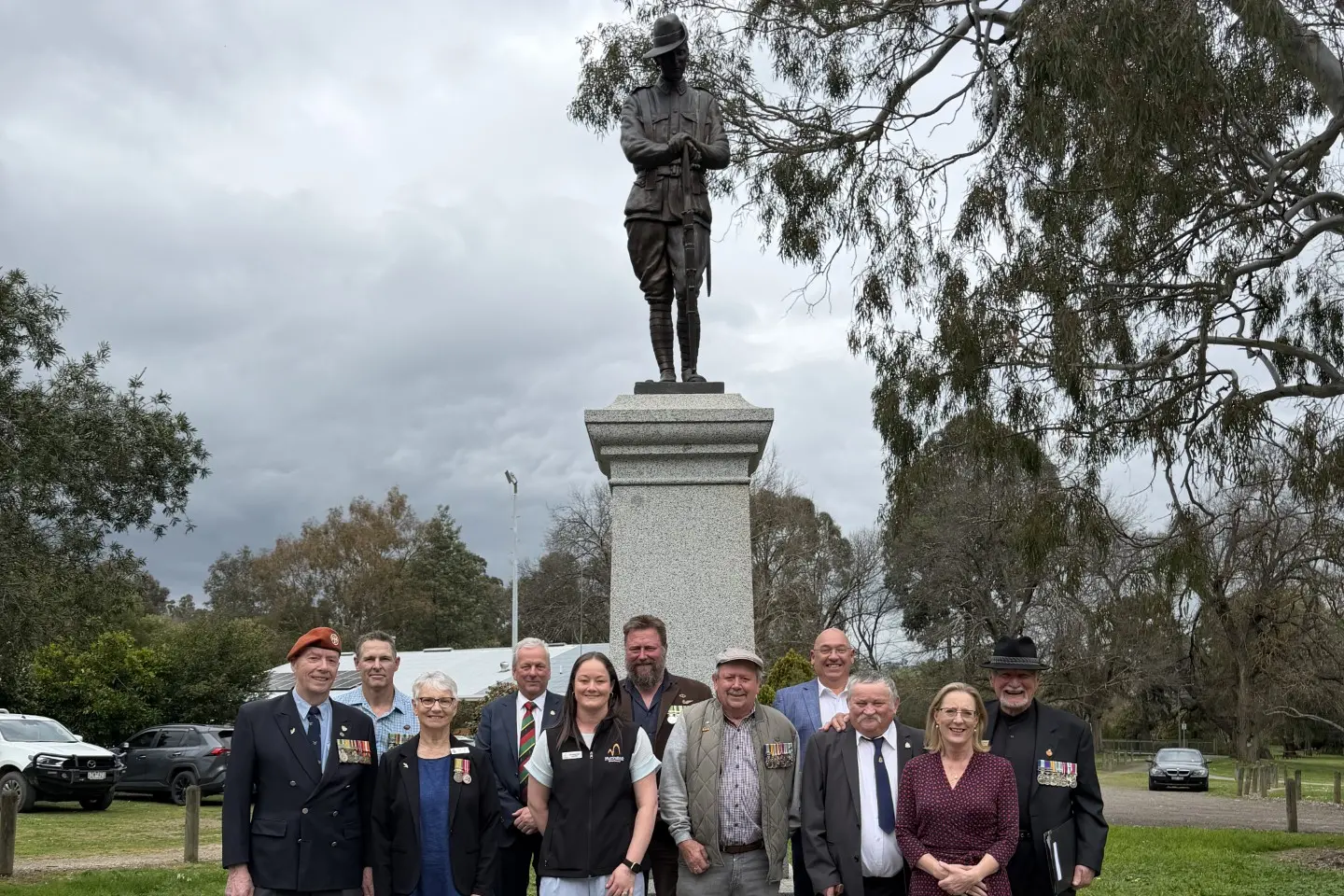
GERRY Laws spoke at National Peacekeepers’ Day in Alexandra last Monday, recognising the contributions of Australian soldiers to international peacekeeping. The following is his address from the day. “It’s great to see the turn out on this National Peacekeepers' Day, as we recognize the sacrifice and continuing contribution of Australians to international peacekeeping. “The United Nations has long been the main organisation to implement peacekeeping missions, but in 1981 the Multinational Force and Observers (or MFO) became the second multinational coalition peacekeeping force. The established role was to operate on the Sinai Peninsula to oversee the Camp David Accords and the Egypt/Israel Peace Treaty following the Israeli withdrawal from Egyptian territory it had occupied since the 1967 Arab-Israeli War. “The MFO was created outside the framework of the UN because of Soviet Union opposition to UN involvement. It is headquartered in Rome and began official operations on April 25, 1982. “Australia and New Zealand contributed to the MFO at the outset as foundation nations by providing the Force's Rotary Wing Aviation Unit comprising 10 Iroquois helicopters plus 140 aircrew, maintenance and support personnel and was supported by a small transport contingent from the French Air Force. “The ADF also provided a joint defence force detachment of air traffic controller Flight Following and Headquarters staff. Once again, our two nations saw their involvement as part of an ANZAC Force, further adding to the ANZAC legend. “In March 1982, eight Iroquois helicopters were offloaded from HMAS Tobruk at the Israeli port of Ashdod after a four week cruise from Brisbane. They were to form the Australian Contingent of the MFO at the former Israeli Air Force Base at Eitam in the northern Sinai desert. The base had been destroyed by the withdrawing forces, and after it was renamed El Gorah, it became known as North Camp. “A similar rotary wing force operated by the US Army Aviation Company was also mounted near Sharm el Sheikh overlooking the Red Sea to cover the southern sector of the Sinai Peninsula and became South Camp. “The helicopters were assembled and test flown before being ferried in a single formation to North Camp in a carefully planned mission. Within a few days they were ready for operations and the ANZAC Rotary Wing Aviation Unit Sinai commenced it’s varied tasking, immediately acquiring the nickname of ‘ANZAC Airlines’. “In an environment that resembled a massive beach, sandstorms quickly became a hazard for both flying operations and general movement around the flight line. Visibility was often down to a hand full of metres and meant the total cessation of flying. Daytime almost turned to night and the wind blew the fine sand everywhere and got into everything. “Sand erosion of the rotor blades and engine components was a big problem and at one time saw the grounding of the whole fleet due to an urgent global maintenance callout that resulted in a lack of replacement spares. “The Contingent was withdrawn in April 1986 as the government sought to reduce Australia's peacekeeping commitments. During their four years of operations the Rotary Wing Aviation Unit amassed an incredible 16,400 accident-free flying hours. The unit was awarded the Duke of Gloucester Cup recognising their operational excellence. “Australia returned to the MFO in 1993, providing 26 soldiers in varying tasks in Operations and Administration roles, and that contribution continues today. “I was proud to serve with the RWAU from January to August 1985 as an aircraft life support technician and I acknowledge the nearly 400 Australian peacekeepers who served on that mission. “I also want to make special mention of the unique sacrifice of my family in particular, but also to the families of all peacekeepers who, in their own way, also served those times. “Today we honour and pay tribute to all Australian peacekeepers for their contribution to the service of peace.”