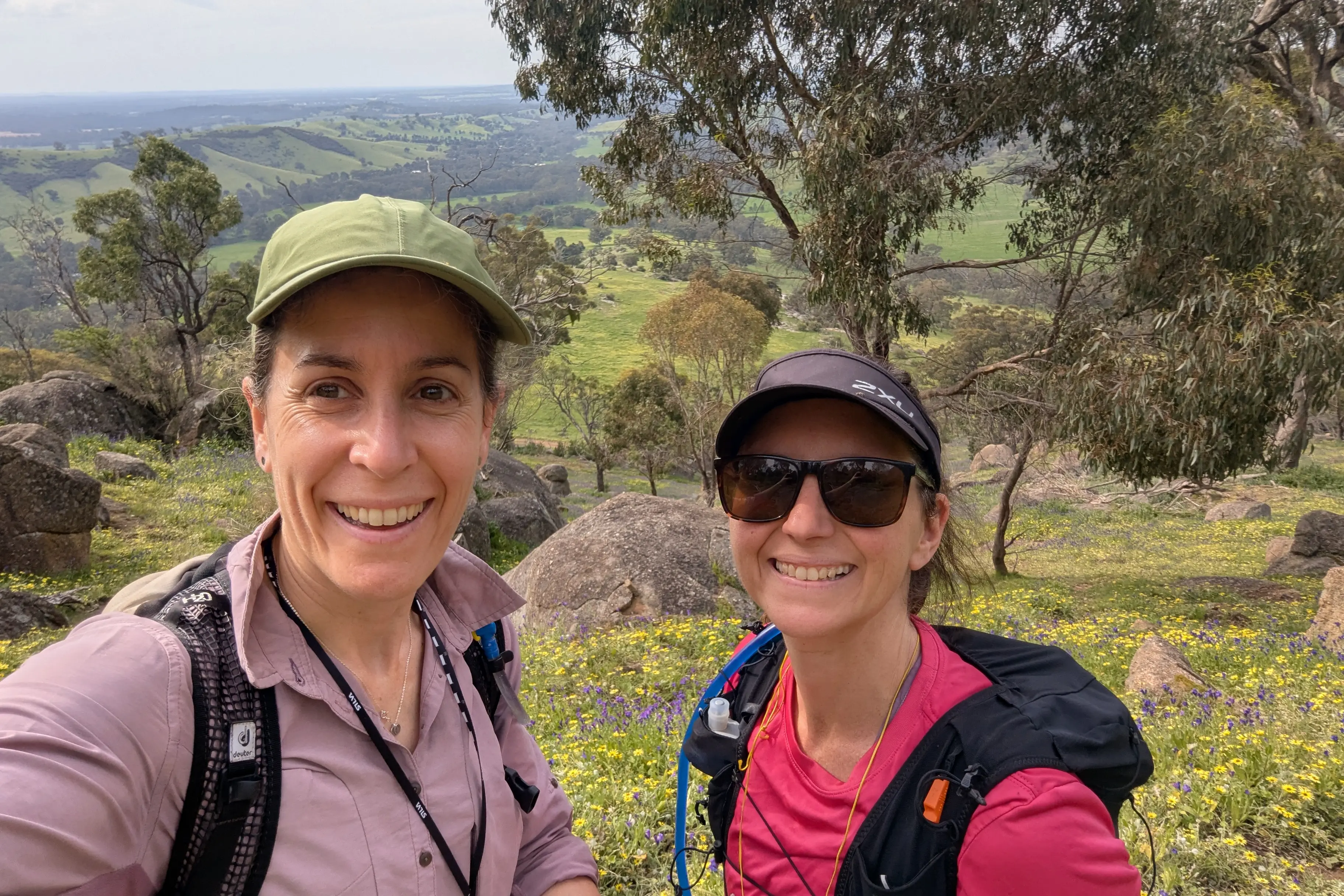
FLOWERDALE-local Sarah Hopkins was one of over 500 competitors that took part in the Victorian Rogaining Championships in September in the Tallarook Ranges, to celebrate 50 years of the map navigation sport. Her and teammate Lisa Ferguson finished first in their division for the six-hour competition, despite thinking that they scored low. “I was regaining with a girlfriend who had only ever done one other bush rogaine before,” Sarah said. “We actually did really well and we surprised ourselves. “We scored 630 points, but we lost 10 points for being a minute late, so we finished with 620 points. “Initially I thought that was really low, but as it turned out, we came first in our division for women.” Rogaining is a long-distance cross-country navigation sport for teams of two to five people using a topographical map and compass, similar to orienteering but much longer duration. “It just feels like an adult treasure hunt,” Sarah said. “When people ask me and they have no idea what it is, I say it's like a treasure hunt for adults. “You choose your own adventure, like whichever way you decide that you want to go, and you go as fast or as slow as you want.” The course is laid out by volunteers beforehand, with checkpoints scattered across various locations. Different checkpoints are worth different amounts of points, depending on how difficult they are to reach. Participants then receive a map and are given an amount of time (in Sarah’s team’s case, six hours) to reach as many as possible. Checkpoints link digitally to wristbands to show that a participant has visited, and points are deducted for every minute that teams are late back to the starting area. Speaking about the Tallarook course, Sarah said, “There was a really great mix, like sort of north of where we were starting from, there was a lot of farmland. “There were some pretty steep hills and some cliff edges in that area. “Generally speaking, if you have to get to the very top of a hill or to the very bottom of a gully, you're getting checkpoints that might be worth a bit more than if you're getting a checkpoint that's only like 40 metres off a track that's pretty easy to navigate to. “I haven't really done farmland before and there were so many fences,” she said. The whole concept of rogaining revolves around map navigation, measuring distance, understanding topography, and using bearings. “What we find fun about it is the constant juggling of how many checkpoints we can get without being late,” Sarah said. “I actually really like having to take bearings and use my skills and knowledge to be able to navigate where we're going. both using the tracks and things that are marked, features marked on the map, but then also your off-track navigation as well. “Rogaining is fabulous because if somebody has never rogained before, you can come along if you're not there for the points and it doesn't matter where you place, people are happy to volunteer and go with you and teach you how to do your off track nav and help you get points and you can stop and rest as much or as little as you want. “Like it's completely open to your team on how you want to run your race, so to speak.” Sarah comes from an outdoor recreation and education background. She undertook an adventure tourism course back in 2002 and did off track navigation as one of the subjects. The first time she tried rogaining was about four and a half years ago, after being invited by a friend who also did outdoor education work. Since that time, she has participated in about two bush rogaines per year and one or two metro rogaines as well, which revolve around city navigation. She has invited other friends to join her, and her partner is interested in the sport as well. Sarah spoke about her enjoyment of the rogaining experience. “The next day, even just when we were chatting about it, we were like, how great was that?” she said. “I know we were both hating life halfway up the hill, but we call it type two fun. “Type one fun is when you're having fun in the moment of what you're doing. “And we said that was probably type two fun, where you see it as fun after the fact. “I also like pushing myself to see how far you get sometimes. “The other thing is that I really love being submerged in nature. “For the most part, you're just there with your teammate and surrounded by nature and loving the outdoors and yeah, it's fabulous.” The six-hour rogaine started at 12pm on Friday and finished at 6pm. Once she was finished with her event, Sarah stuck around to volunteer her time to help with the 15-hour and 24-hour events. Everything is volunteer run when it comes to rogaining. Some people volunteer for a couple of days and go set up the course and put all the checkpoints out. Others check participants have the mandatory gear (first aid kit, whistle, headtorch, compass, mobile phone, etcetera), and some volunteer in the catering tent. “I helped out in the catering tent,” Sarah said. “We just served food that night, and then the next morning when we got up, some people were helping with breakfast and then I chopped stuff to help with the food for lunch, for when those guys were finishing a 15 and 24-hour event.” Sarah also explained how the 15-hour and 24-hour rogaine events work. “The 24 hours is the easiest to explain, I suppose, because we all started at 12pm,” she said. “And so they started at noon on Friday and finished at noon on Saturday. “They could have slept as much or as little as they wanted.” “The Victorian Rogaining Association obviously says they encourage people sleeping and encourage people not driving home afterwards if they're tired. “Don't run 24 hours and drive two and a half hours home.” The 15-hour event is similar, running from 12pm Friday to 12pm Saturday, except participants must check into home base for nine hours to rest. “I think the 15 hour is a great stepping stone to then get you ready for like a 24-hour event,” Sarah said. “But I mean, it's a choose your own adventure. “You can just enter the 24-hour race and still decide to sleep for nine hours overnight. “It's not a super competitive vibe in any way, shape or form. “And I think that's probably what I love about it as well. Everyone's really encouraging and supportive.” The Victorian Rogaining Association website has the latest information about upcoming events, as well as how to navigate and find bearings if people want to get involved and learn a new skill. “If people have no navigating skills, they can also learn them and have people help them,” Sarah added. “Rogaining is very welcoming of new people to pick it up as well; it's not like people have to have existing skills to be able to do it.”