What can we actually do to help communities recover after bushfire?
Over the past 10 weeks, we’ve had a steady stream of messages, texts and emails asking the same question:
“What can we do to help?”
It’s a good question.
And the answer isn’t complicated—but it does need to be understood.
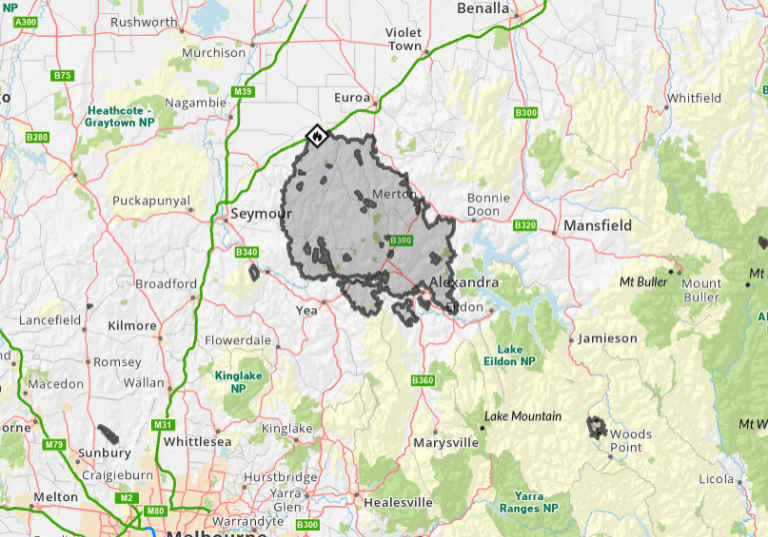
Around 10 weeks on from the Longwood fires, from what I’m seeing on the ground across Fawcett and Koriella and the wider Murrindindi Shire—Cathkin, Molesworth, Yarck, Kanumbra, Ut Creek Road, Ruffy, Terip Terip, Maintongoon, Alexandra and Merton...recovery isn’t one big solution.
It’s a series of small, practical actions that add up.
And when you strip it back, communities need three things:
1. Cash works best
Not stuff. Not clutter.
Cash gives people choice.
It gets support where it’s needed fast.
And it supports local businesses at the same time.
At Fawcett Hall, we’ve put around $30,000 straight back into the immediate community through local business vouchers—funded by donations received locally, nationally and internationally (including a generator jerry can swap at the hall).
It worked because it was simple, local and immediate.
2. Clear, honest information matters
People don’t need jargon or noise.
They need to understand:
What’s happening
What support exists
What to do next
We’ve come back to the KISS method time and time again.
Because when people are dealing with bushfire trauma, there is very little capacity left.
Trust me on this one—we all get foggy and tired quickly.
And not everyone has strong digital literacy—or stable internet. #blackspot
Simple, consistent communication makes recovery smoother.
3. Communities lead their own recovery
The people living it know what they need.
The best outcomes happen when support wraps around communities—not over the top of them.
Local halls, local groups, local leaders—they matter more than people realise.
So what does this actually look like in practice?
Here’s what’s making a real difference:
* Back local halls and community groups
- Give small, flexible funding—$1,000 to $2,000—and let communities decide what’s needed.
- Meals, catch-ups, working bees, garden blitzes, informal gatherings, even small music or cultural events.
- $5,000–$10,000 can fund a generator so the next power outage doesn’t stop everything.
- Keep conditions and paperwork light—we don’t have the brain space.
Even better—have the conversation first, then help complete the forms.
This is where connection happens.
And connection is recovery.
* Invest in fencing materials (and support local businesses at the same time)
It’s not flashy, but it’s one of the biggest pressure points.
Fencing is infrastructure.
It’s safety.
It’s the ability to run stock again.
For many—especially those underinsured—it’s the difference between moving forward or standing still.
For context:
Black steel posts range from $6–$12 each. A 2.5mm x 1500m wire coil is around $250.
Across our region, we estimate around 500,000 posts are needed.
* Support community-led thank you moments
- Dinners, BBQs, lunches, simple gatherings.
- A chance to acknowledge volunteers, hall teams, CFA crews, neighbours and families.
These aren’t just “nice to have.”
They rebuild identity, pride and momentum—things that quietly disappear after a disaster.
And here’s the part that often gets missed:
Recovery isn’t about going back to how things were.
It’s about helping people move forward into what life looks like now.
After the 2009 fires, it was called the “new normal.”
That still holds true.
This isn’t theory.
This is what we’re seeing play out every day.
When support is practical, local and flexible—it works.
When it’s delayed, mismatched or overcomplicated—it slows things down.
If you want to help:
Keep it simple.
Back people.
Back communities—their hubs, their halls.
That’s where the real impact is.
Opinion/Observation piece - Pres Sam
📷 Photo of remnant of front fence at Fawcett Hall atop new fence in view built by Operation Vet Assist.
Autumn morning shows burnt tree with epicormic shoots and burnt trees along creek.
Scorched earth, dead leaves in patches in foreground.
#green #stillburnt #CommunityLedRecovery
... See MoreSee Less